 Coinomize
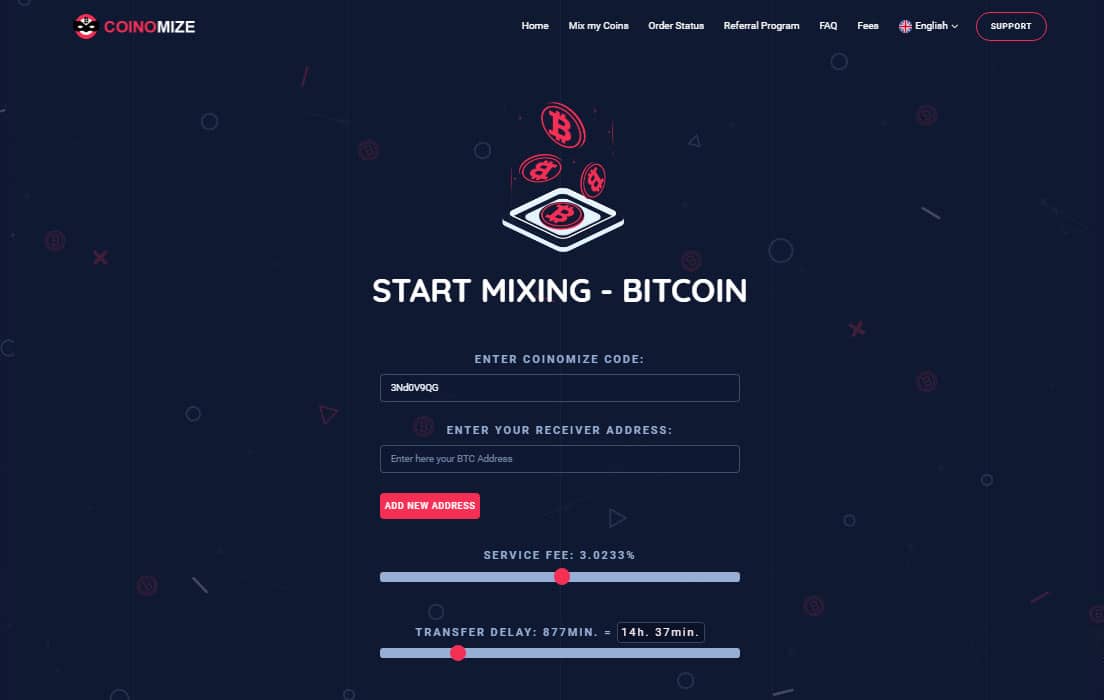
A pooled Bitcoin mixer. You send BTC to a deposit address Coinomize generates for you, the funds join a reserve, and an unrelated amount of Bitcoin from that reserve is sent to the destination addresses you specified — after the delay and at the fee you chose. The on-chain trail between your old wallet and your new one is broken. The service has been operating under the same brand since 2019.
Answers
Coinomize FAQ.
Real questions from real users. The short answer is usually enough — the longer ones add context where it matters.
If your question isn't here, the security page covers PGP and the letter of guarantee in detail, and the how it works page explains the mechanism. For anything left over, support contact is at the bottom of this page.
About the service
Yes — like every pooled mixer. The funds spend a short window in the operator's reserve between your deposit and your withdrawal. That window is the mechanism. The PGP-signed letter of guarantee is the protection that turns the operator's commitment into something you can verify publicly.
No. Bitcoin only. Single-asset focus keeps the reserve deep and the code narrow. Other chains have other privacy tools that work differently — wrap them in Bitcoin first if you want to mix here.
Amounts and timing
0.005 BTC. Below that figure the pool cannot anonymise the amount effectively — dust outputs stand out against the rest of the reserve. If you have several small balances, aggregate them in a wallet first and run one larger session.
It depends on the current reserve liquidity. The maximum is shown before you confirm. Larger sums are commonly split across multiple sessions over different days — both for liquidity reasons and to widen the candidate set for any chain-analysis attempt.
From minutes to days, set by you. The delay is configurable from instant up to 96 hours per output, and you can stagger the delays across multiple destinations. Longer delays give better temporal privacy; instant withdrawals are convenient but easier to back-correlate by timing.
Security and trust
A plain text file, signed with the Coinomize PGP key, listing the deposit address shown to you, every output address, the fee, and the chosen delay. You save it before you send any BTC. If anything goes wrong, the signed letter is the public, verifiable record of what was agreed. The security page goes into detail.
Only for the retention window you pick at the start of the mix — minimum 1 hour, maximum 7 days. After that, the link between your deposit and your withdrawal is removed from the server. Even a compromise of Coinomize after that point cannot reveal which input matched your output.
Yes. A Tor v3 onion mirror runs alongside the clearnet site. The PGP key fingerprint is the same on both — verify it from a published, archived copy before your first session.
If something goes wrong
Check the letter of guarantee for the configured delay window. The earliest possible arrival is the deposit confirmation plus the chosen delay; the latest is usually within an hour of that, allowing for mempool conditions. If the full window has passed and nothing has arrived, contact support with the letter attached — it's the source of truth.
Coinomize processes the deposit at the rate that matches the closest matching session in its records. If the amount is outside any allowed range, it's held for support to handle manually using your letter of guarantee. Don't send a "correction" transaction to the same deposit address — open a new session instead.
Support contact addresses are published on the main Coinomize site behind a one-step verification. Always include your letter of guarantee in the first message — it identifies your session and saves a back-and-forth.